Tackling climate change on a human level

by Asian Correspondent


ASIA Pacific is feeling the dire effects of climate change more acutely than most regions of the world. Already volatile weather systems are becoming more extreme and more destructive owing to the rise in global carbon emissions.

The latest report from the Inter-governmental Panel on Climate Change makes this clear, warning the planet only has 12 years to act or face irreversible catastrophic changes that will threaten society as we know it.

The signs can already be seen; droughts in Pakistan, typhoons in the Philippines, floods in India.

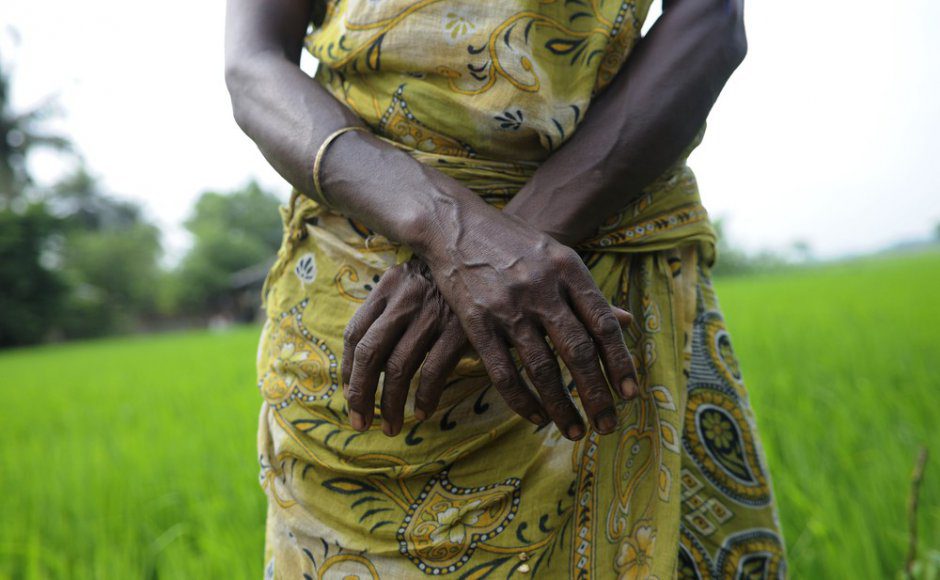
At the peak of such weather disasters, the consequences are widely broadcast in the way of figures; homes lost, number of dead, cost of the destruction. But what is often forgotten is how this shift in weather is impacting people’s everyday lives and exacerbating already existing problems that affect people’s freedoms and human rights.

The challenges posed by an ever-worsening climate are wide and varied, and the people trying to adapt are often left to face them alone. But the work of Malaysia-based NGO and the Danish Family Planning Association (DFPA) hopes to change at least one aspect of that.

The Asian Pacific Resource and Research Centre for Women (ARROW) and the DFPA want to shine a light on the pervasive and damaging effect climate change has on women and girls’ sexual and reproductive health and rights (SRHR), and work towards finding solutions.

“Climate change exacerbates the challenges that many poor and marginalised women and girls are already facing due to lack of gender equality – including lack of respect, protection and fulfillment of their sexual and reproductive health and rights,” said Sivananthi Thanenthiran, Executive Director of ARROW.

“There is an urgent need for action to prevent SRHR-related health impacts, unplanned pregnancies, violations of rights, and to make families resilient to changes in their everyday lives as a result of climate change.”

ARROW and the DFPA have teamed up to tackle the problem, launching the Women & Earth Initiative (WORTH); a platform where environmental and climate change civil society organisations(CSOs) can develop new and integrated solutions to the mounting problems.

Each CSO accepted to the programme will go through a five-month training process, after which they become eligible for a WORTH grant to put their ideas into practice.

The initiative is starting in four countries already feeling the devastating effects of climate change; Bangladesh, Pakistan, Burma (Myanmar), and the Philippines.

The fund believes innovative, out-of-the-box thinking implemented on a small scale in these affected communities can eventually be scaled up to help the global fight against climate disaster and its adverse impact, especially on women and girls.

The WORTH programme and fund is being launched on the sidelines of the 24th Conference of the Parties to the United Nations Framework Convention on Climate Change (UNFCCC)or COP 24 in Poland where the link between SRHR and climate will be discussed.

Population growth and a lack of access to SRHR is considered to be exacerbating the effects of climate change and, according to International Planned Parenthood (IPPF), slower population growth can help the world’s nations better prevent, and cope with, the dangers posed.

Providing women and families with the means to prevent unintended pregnancies not only empowers them economically and socially, but reduces the strain on the environment and improves natural resource conservation.

WORTH believes with all these sectors working together, countries will be able to avoid the most disastrous effects of climate change.

Vietnam

  • Centre for Creative Initiatives in Health and Population (CCIHP)

Sri Lanka

  • Bakamoono;
  • Women and Media Collective (WMC),
  • Youth Advocacy Network – Sri Lanka (YANSL)

Singapore

  • End Female Genital Cutting Singapore
  • Reproductive Rights (WGNRR)

Philippines

  • Democratic Socalist Women of the Philippines (DSWP);
  • Galang;
  • Healthcare Without Harm;
  • Institute for Climate and Sustainable Cities;
  • Likhaan Centre for Women’s Health;
  • Nisa UI Haqq Fi Bangsamoro;
  • PATH Foundation Inc. (PFPI);
  • Women’s Global Network for
    Reproductive Rights (WGNRR)

Pakistan

  • Aahung, Centre for Social Policy Development (CSPD);
  • Forum for Dignity Initiative (FDI);
  • Gravity Development Organization; Green Circle Organization;
  • Indus Resources Center (IRC);
  • Idara-e-Taleem-O-Aaghai (ITA);
  • Rehnuma – Family Planning Association Pakistan;
  • Shelter
    Participatory Organisation;
  • Shirkat Gah;
  • The Enlight Lab

Nepal

  • Beyond Beijing Committee (BBC);
  • Blind Youth Association of Nepal;
  • Blue Diamond Society (BDS);
  • Nepalese Youth for Climate Action (NYCA);
  • Visible Impact;
  • Women’s Rehabilitation Centre (WOREC);
  • YPEER Nepal;
  • YUWA

Myanmar

  • Colourful Girls Organization;
  • Green Lotus Myanmar

Maldives

  • Hope for Women;
  • Society for Health Education (SHE)

Malaysia

  • Federation of Reproductive Health Associations of Malaysia (FRHAM);
  • Joint Action Group for Gender Equality (JAG);
  • Justice for Sisters (JFS);
  • Reproductive Health Association of
    Kelantan (ReHAK);
  • Reproductive Rights Advocacy Alliance Malaysia (RRAAM);
  • Sisters in Islam (SIS)

Lao PDR

  • Lao Women’s Union;
  • The Faculty of Postgraduate Studies at the University of Health
    Sciences (UHS)

Indonesia

  • Aliansi Satu Visi (ASV);
  • CEDAW Working Group;
  • Hollaback! Jakarta;
  • Institut Kapal Perempuan;
  • Kalyanamitra;
  • Komnas Perempuan;
  • Remaja Independen Papua/Independent Youth
    Forum Papua (FRIP/IYFP);
  • Perkumpulan Keluarga Berencana Indonesia (PKBI);
  • Perkumpulan Lintas Feminis Jakarta;
  • Perkumpulan Pamflet Generasi;
  • RUTGERS Indonesia;
  • Sanggar SWARA;
  • Women on Web;
  • Yayasan Kesehatan Perempuan (YKP); 
  • YIFOS Indonesia

India

  • CommonHealth;
  • Love Matters India;
  • Pravah;
  • Rural Women’s Social Education Centre (RUWSEC);
  • SAHAYOG;
  • Sahaj;
  • Sahiyo;
  • SAMA – Resource Group for Women and Health;
  • WeSpeakOut;
  • The YP Foundation (TYPF)

Morocco

  • Association Marocaine de Planification Familiale (AMPF),
  • Morocco Family Planning Association
Tackling climate change on a human level

by Asian Correspondent


ASIA Pacific is feeling the dire effects of climate change more acutely than most regions of the world. Already volatile weather systems are becoming more extreme and more destructive owing to the rise in global carbon emissions.

The latest report from the Inter-governmental Panel on Climate Change makes this clear, warning the planet only has 12 years to act or face irreversible catastrophic changes that will threaten society as we know it.

The signs can already be seen; droughts in Pakistan, typhoons in the Philippines, floods in India.

At the peak of such weather disasters, the consequences are widely broadcast in the way of figures; homes lost, number of dead, cost of the destruction. But what is often forgotten is how this shift in weather is impacting people’s everyday lives and exacerbating already existing problems that affect people’s freedoms and human rights.

The challenges posed by an ever-worsening climate are wide and varied, and the people trying to adapt are often left to face them alone. But the work of Malaysia-based NGO and the Danish Family Planning Association (DFPA) hopes to change at least one aspect of that.

The Asian Pacific Resource and Research Centre for Women (ARROW) and the DFPA want to shine a light on the pervasive and damaging effect climate change has on women and girls’ sexual and reproductive health and rights (SRHR), and work towards finding solutions.

“Climate change exacerbates the challenges that many poor and marginalised women and girls are already facing due to lack of gender equality – including lack of respect, protection and fulfillment of their sexual and reproductive health and rights,” said Sivananthi Thanenthiran, Executive Director of ARROW.

“There is an urgent need for action to prevent SRHR-related health impacts, unplanned pregnancies, violations of rights, and to make families resilient to changes in their everyday lives as a result of climate change.”

ARROW and the DFPA have teamed up to tackle the problem, launching the Women & Earth Initiative (WORTH); a platform where environmental and climate change civil society organisations(CSOs) can develop new and integrated solutions to the mounting problems.

Each CSO accepted to the programme will go through a five-month training process, after which they become eligible for a WORTH grant to put their ideas into practice.

The initiative is starting in four countries already feeling the devastating effects of climate change; Bangladesh, Pakistan, Burma (Myanmar), and the Philippines.

The fund believes innovative, out-of-the-box thinking implemented on a small scale in these affected communities can eventually be scaled up to help the global fight against climate disaster and its adverse impact, especially on women and girls.

The WORTH programme and fund is being launched on the sidelines of the 24th Conference of the Parties to the United Nations Framework Convention on Climate Change (UNFCCC)or COP 24 in Poland where the link between SRHR and climate will be discussed.

Population growth and a lack of access to SRHR is considered to be exacerbating the effects of climate change and, according to International Planned Parenthood (IPPF), slower population growth can help the world’s nations better prevent, and cope with, the dangers posed.

Providing women and families with the means to prevent unintended pregnancies not only empowers them economically and socially, but reduces the strain on the environment and improves natural resource conservation.

WORTH believes with all these sectors working together, countries will be able to avoid the most disastrous effects of climate change.

Maldives

  • Hope for Women
  • Society for Health Education (SHE)

Mongolia

  • MONFEMNET National Network