
The Sustainable Development Goals (SDGs) were adopted in 2015 to achieve 17 goals and 169 targets by 2030. Among them, SDG-5 focuses on achieving gender equality and ending all forms of violence against women and girls. It calls for eliminating harmful practices such as child marriage, slavery, and prostitution in the name of religion and culture, while recognizing women’s economic contributions. SDG-5 further emphasizes equal participation in political and economic life, access to education and healthcare—including reproductive and mental health—and equal rights over assets, technology, and inheritance.”While India has adequate legal framework to address gender discrimination, violence and harmful practices, ‘women’ are not a homogenous group. Caste-embedded patriarchy creates unequal realities, with Dalit women and girls showing poor indicators of socio-economic, health and political participation. Their marginalization heightens vulnerability to exploitation, often as frontline casualties of forced and exploitative labour and targeted violence.
Many remain trapped in informal work alongside families, while practices like the Devadasi/Jogini system and sanitation labour—including manual scavenging—continue to target Dalit women and girls. Acts of resistance or assertion of rights frequently invite brutal caste-based gender violence, including sexual assault and murder. Such discrimination and violence reinforce systemic marginalization, leaving deep, intergenerational impacts on survivors’ health, agency, and access to rights. For effective policymaking, it is crucial to recognize the central role of caste in shaping gender inequality in India and to make inclusion of the most marginalized women integral to all gender equality efforts—because ‘None of Us Are Equal Until All of Us Are Equal’.
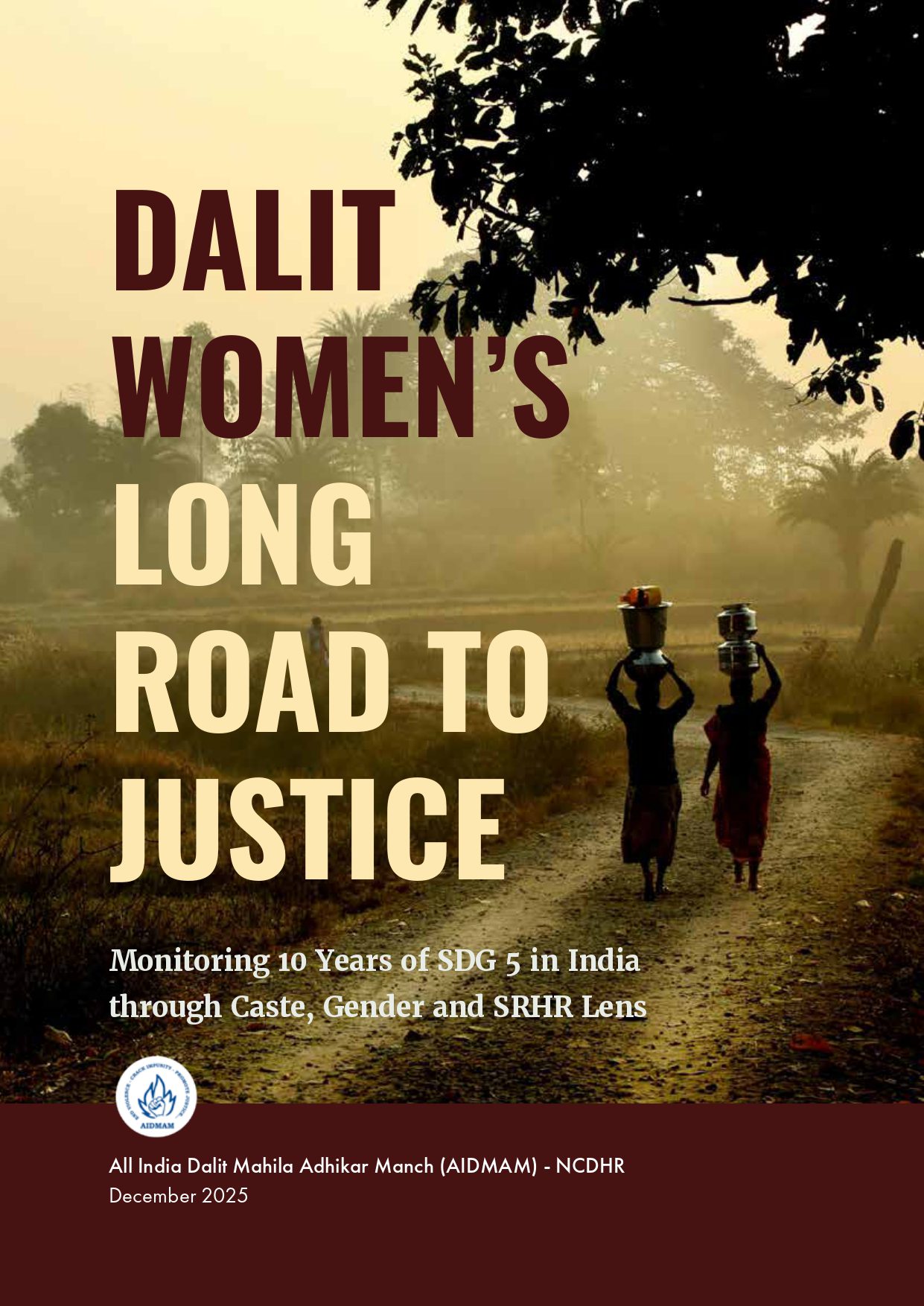
In this context, there is a pressing need to generate more evidence that captures the lived realities of Dalit women whose voices often remain absent from mainstream gender discourse. The All India Dalit Mahila Adhikar Manch, with support from ARROW, conducted an evidence-based assessment of gender equality in India through the intersecting lenses of caste, gender, education, sexual and reproductive health, mental health and decent work. The report, “Dalit Women’s Long Road To Justice – Monitoring 10-Years of SDG-5 in India through Caste, Gender and SRHR Lens,” reviews progress and persistent gaps in achieving SDG-5 for Dalit women (2015–2025) and outlines actionable strategies for advancing inclusive gender equality beyond 2025.