Challenging the Influence of Religion on Universal Access to SRHR

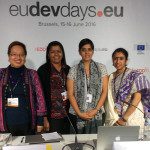
ARROW and partners at the European Development Days (EDD)

Achieving sustainable development has to involve comprehensively addressing and ensuring universal access to sexual and reproductive health and rights (SRHR) in its totality. The benefits have been proven and include healthier, more productive and longer lives, education opportunities for girls, economic gains for the household, community and country, and dealing with major diseases such as HIV and AIDS. However, universal access is influenced by religion (including the use of extreme interpretations and ideologies of fundamentalism and extremism). These ideologies have gaining acceptance across the globe and religions, and are affected women and girls’ access to rights and their quality of life and wellbeing.

This was the focus of a panel session entitled Challenging the Influence of Religion on Universal Access to Sexual and Reproductive Health and Rights organized by ARROW on 16 June at the recently concluded European Union Development Days (EDD). EDD was organised by the European Commission and was held in Brussels, Belgium from 15-16 June 2016 at Tour and Taxi. EDD brings the development community together to share experiences that would inspire new partnerships and innovative solutions to challenges.

Listen to the full session below.

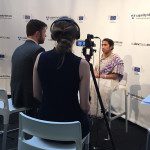
Our partners, Likhaan Centre for Women’s Health, the Philippines and Naripokkho, Bangladesh, joined us in the session. The session was moderated by Mangala Namasivayam, Senior Programme Officer, ARROW. Presenters included Azra Abdul Cader, Senior Programme Officer, ARROW, Rina Jimenez David, Philippines and Nure Maksurat, Bangladesh. It was done in a talk-show format with participants responding to questions posed by the moderator that focused on sharing the research findings and advocacy efforts from a ten-country project supported by the EU and Norad.
The project aims to improve the evidence base that critically explores the interlinkages among religion, extreme interpretations of religion, religious fundamentalisms and extremism and its influence on SRHR and engage in advocacy that would challenge the limiting ways in which religion is used. The ARROW Project focuses on ten countries: India, Sri Lanka, Pakistan, Maldives, Bangladesh, Malaysia, Philippines, Indonesia, Morocco and Egypt.

Some key regional research findings shared at the session included:

-Knowledge of, access to and control over reproductive health services, such as contraception and safe abortion services, is justified by the use of religious beliefs, practices and narrow interpretation of religious texts. These views permeate into discourses around service provision and into the development and design of laws and policies that are devised to provide services.


-Messaging used in various spaces and by actors is justified by interpretations of prohibition, notions of what constitutes promiscuity and decision making power and as a result access is limited to some groupings over others.


-Religious scholars and leaders, who are men, are considered as the authority of acceptable forms of contraception, provision of services and target populations and their own notions and perceptions influence their messaging. As a result, there is no single message that is derived from sacred texts.


-Laws and practices act as narrowly devised preventive mechanisms by causing fear of being stigmatized, prioritising certain forms of behavior as acceptable, and the threat of punishments.


-The rights of people, especially those of women and girls are secondary to notions of acceptable practices that have to prevail according to religious practice, narratives and interpretation.


-Young people’s access to Comprehensive Sexuality Education (CSE) is not considered in its broadest sense. Decisions around CSE provision is influenced by religious perspectives and teaching of what is considered acceptable behaviour, the need for cultural and religious preservation and control over segments of the population.


The session stressed that engagements on these issues to bring about change have to be around changing mindsets and facilitating action at all levels over a sustained period of time, recognizing that the influence that religion has on rights will not change overnight. In doing so, capturing the lived experiences of how religion affects women’s lives and their SRHR is important as it gives us the evidence in order to advocate. Without these voices and experiences the decision-making and influence will remain in the hands of a selected few. Some voices and experiences are lost or silenced with the global focus on the war on terror. At the same time, creating the debate and discourse is important which has to include developing counter narratives and progressive interpretations.

Rina David shared her experiences and observations at EDD in a column in the Inquirer.

Vietnam

  • Centre for Creative Initiatives in Health and Population (CCIHP)

Sri Lanka

  • Bakamoono;
  • Women and Media Collective (WMC),
  • Youth Advocacy Network – Sri Lanka (YANSL)

Singapore

  • End Female Genital Cutting Singapore
  • Reproductive Rights (WGNRR)

Philippines

  • Democratic Socalist Women of the Philippines (DSWP);
  • Galang;
  • Healthcare Without Harm;
  • Institute for Climate and Sustainable Cities;
  • Likhaan Centre for Women’s Health;
  • Nisa UI Haqq Fi Bangsamoro;
  • PATH Foundation Inc. (PFPI);
  • Women’s Global Network for
    Reproductive Rights (WGNRR)

Pakistan

  • Aahung, Centre for Social Policy Development (CSPD);
  • Forum for Dignity Initiative (FDI);
  • Gravity Development Organization; Green Circle Organization;
  • Indus Resources Center (IRC);
  • Idara-e-Taleem-O-Aaghai (ITA);
  • Rehnuma – Family Planning Association Pakistan;
  • Shelter
    Participatory Organisation;
  • Shirkat Gah;
  • The Enlight Lab

Nepal

  • Beyond Beijing Committee (BBC);
  • Blind Youth Association of Nepal;
  • Blue Diamond Society (BDS);
  • Nepalese Youth for Climate Action (NYCA);
  • Visible Impact;
  • Women’s Rehabilitation Centre (WOREC);
  • YPEER Nepal;
  • YUWA

Myanmar

  • Colourful Girls Organization;
  • Green Lotus Myanmar

Maldives

  • Hope for Women;
  • Society for Health Education (SHE)

Malaysia

  • Federation of Reproductive Health Associations of Malaysia (FRHAM);
  • Joint Action Group for Gender Equality (JAG);
  • Justice for Sisters (JFS);
  • Reproductive Health Association of
    Kelantan (ReHAK);
  • Reproductive Rights Advocacy Alliance Malaysia (RRAAM);
  • Sisters in Islam (SIS)

Lao PDR

  • Lao Women’s Union;
  • The Faculty of Postgraduate Studies at the University of Health
    Sciences (UHS)

Indonesia

  • Aliansi Satu Visi (ASV);
  • CEDAW Working Group;
  • Hollaback! Jakarta;
  • Institut Kapal Perempuan;
  • Kalyanamitra;
  • Komnas Perempuan;
  • Remaja Independen Papua/Independent Youth
    Forum Papua (FRIP/IYFP);
  • Perkumpulan Keluarga Berencana Indonesia (PKBI);
  • Perkumpulan Lintas Feminis Jakarta;
  • Perkumpulan Pamflet Generasi;
  • RUTGERS Indonesia;
  • Sanggar SWARA;
  • Women on Web;
  • Yayasan Kesehatan Perempuan (YKP); 
  • YIFOS Indonesia

India

  • CommonHealth;
  • Love Matters India;
  • Pravah;
  • Rural Women’s Social Education Centre (RUWSEC);
  • SAHAYOG;
  • Sahaj;
  • Sahiyo;
  • SAMA – Resource Group for Women and Health;
  • WeSpeakOut;
  • The YP Foundation (TYPF)

Morocco

  • Association Marocaine de Planification Familiale (AMPF),
  • Morocco Family Planning Association
Challenging the Influence of Religion on Universal Access to SRHR

ARROW and partners at the European Development Days (EDD)

Achieving sustainable development has to involve comprehensively addressing and ensuring universal access to sexual and reproductive health and rights (SRHR) in its totality. The benefits have been proven and include healthier, more productive and longer lives, education opportunities for girls, economic gains for the household, community and country, and dealing with major diseases such as HIV and AIDS. However, universal access is influenced by religion (including the use of extreme interpretations and ideologies of fundamentalism and extremism). These ideologies have gaining acceptance across the globe and religions, and are affected women and girls’ access to rights and their quality of life and wellbeing.

This was the focus of a panel session entitled Challenging the Influence of Religion on Universal Access to Sexual and Reproductive Health and Rights organized by ARROW on 16 June at the recently concluded European Union Development Days (EDD). EDD was organised by the European Commission and was held in Brussels, Belgium from 15-16 June 2016 at Tour and Taxi. EDD brings the development community together to share experiences that would inspire new partnerships and innovative solutions to challenges.

Listen to the full session below.

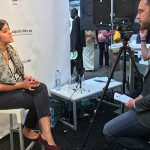
Our partners, Likhaan Centre for Women’s Health, the Philippines and Naripokkho, Bangladesh, joined us in the session. The session was moderated by Mangala Namasivayam, Senior Programme Officer, ARROW. Presenters included Azra Abdul Cader, Senior Programme Officer, ARROW, Rina Jimenez David, Philippines and Nure Maksurat, Bangladesh. It was done in a talk-show format with participants responding to questions posed by the moderator that focused on sharing the research findings and advocacy efforts from a ten-country project supported by the EU and Norad.
The project aims to improve the evidence base that critically explores the interlinkages among religion, extreme interpretations of religion, religious fundamentalisms and extremism and its influence on SRHR and engage in advocacy that would challenge the limiting ways in which religion is used. The ARROW Project focuses on ten countries: India, Sri Lanka, Pakistan, Maldives, Bangladesh, Malaysia, Philippines, Indonesia, Morocco and Egypt.

Some key regional research findings shared at the session included:

-Knowledge of, access to and control over reproductive health services, such as contraception and safe abortion services, is justified by the use of religious beliefs, practices and narrow interpretation of religious texts. These views permeate into discourses around service provision and into the development and design of laws and policies that are devised to provide services.


-Messaging used in various spaces and by actors is justified by interpretations of prohibition, notions of what constitutes promiscuity and decision making power and as a result access is limited to some groupings over others.


-Religious scholars and leaders, who are men, are considered as the authority of acceptable forms of contraception, provision of services and target populations and their own notions and perceptions influence their messaging. As a result, there is no single message that is derived from sacred texts.


-Laws and practices act as narrowly devised preventive mechanisms by causing fear of being stigmatized, prioritising certain forms of behavior as acceptable, and the threat of punishments.


-The rights of people, especially those of women and girls are secondary to notions of acceptable practices that have to prevail according to religious practice, narratives and interpretation.


-Young people’s access to Comprehensive Sexuality Education (CSE) is not considered in its broadest sense. Decisions around CSE provision is influenced by religious perspectives and teaching of what is considered acceptable behaviour, the need for cultural and religious preservation and control over segments of the population.


The session stressed that engagements on these issues to bring about change have to be around changing mindsets and facilitating action at all levels over a sustained period of time, recognizing that the influence that religion has on rights will not change overnight. In doing so, capturing the lived experiences of how religion affects women’s lives and their SRHR is important as it gives us the evidence in order to advocate. Without these voices and experiences the decision-making and influence will remain in the hands of a selected few. Some voices and experiences are lost or silenced with the global focus on the war on terror. At the same time, creating the debate and discourse is important which has to include developing counter narratives and progressive interpretations.

Rina David shared her experiences and observations at EDD in a column in the Inquirer.

Maldives

  • Hope for Women
  • Society for Health Education (SHE)

Mongolia

  • MONFEMNET National Network