
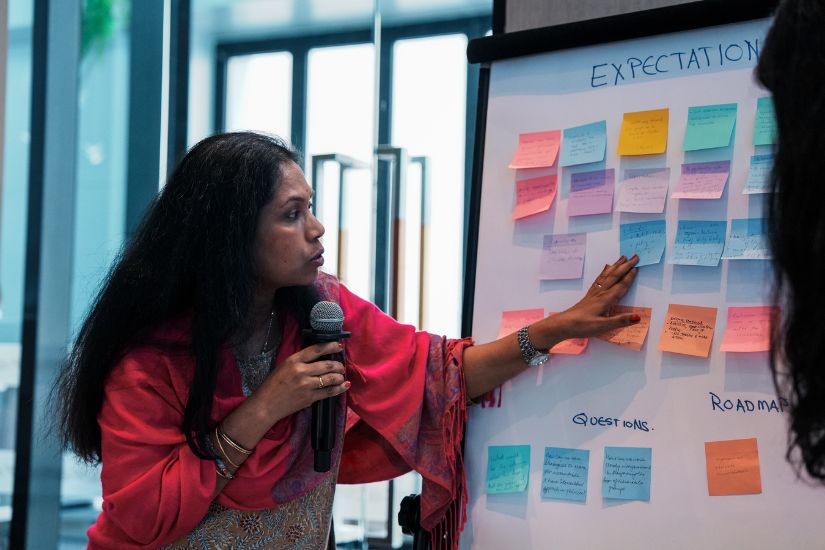
The adoption of the Belém Gender Action Plan (GAP) at the 30th session of the United Nations Climate Change Conference (COP30) marked a new milestone for gender-responsive climate action. The new plan, covering the period from 2026–2034, outlines practical actions to integrate gender equality into climate policies and programmes by strengthening women’s leadership, building institutional capacity and knowledge, mobilising gender-responsive climate finance, and improving monitoring and accountability.
But the Belém GAP’s success will depend on how countries implement it across diverse regional, national and local contexts.
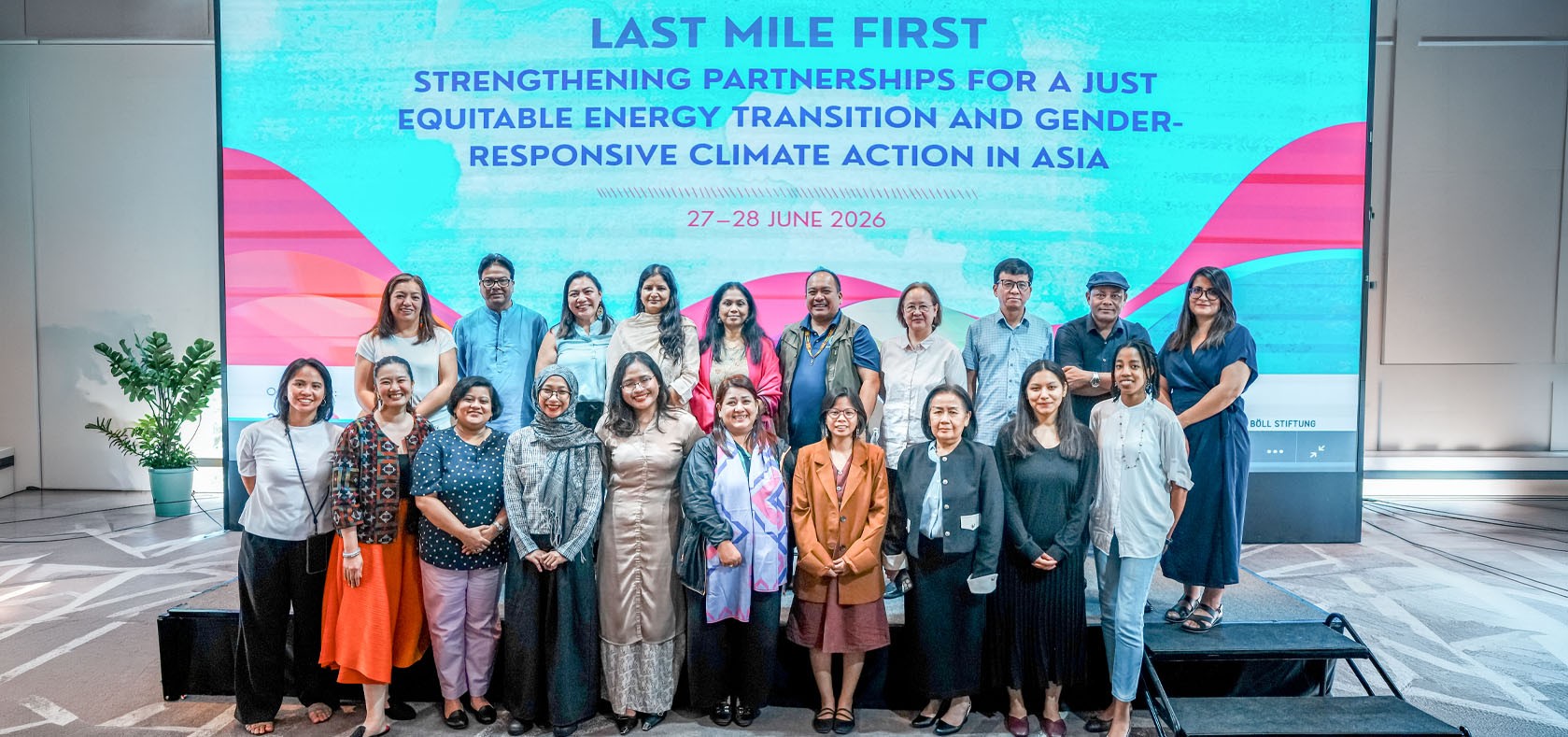
To identify how implementation could take shape in Asia, women’s rights organisations, women-led organisations, Indigenous Peoples, organisations of persons with disabilities, youth leaders and development partners came together to co-design a regional road map that will serve as a practical guide for implementing the Belém GAP through 2034 and related climate commitments, outlining concrete actions that countries can adapt to their own contexts.
Communities must shape climate decisions
A clear message emerged from the dialogue. Climate action is more effective when it is shaped by the people living its realities.
“Climate action cannot continue with a top-down approach. It must begin from the front lines, where the communities most affected are already leading solutions,” said Robie Halip, Executive Director of the Right Energy Partnership with Indigenous Peoples (REP). “Women, Indigenous Peoples, youth, persons with disabilities and other at-risk communities must be recognised as rights holders, knowledge holders and decision-makers from the start.”
Indigenous Peoples likewise emphasised that respecting their right to determine their own development priorities and that drawing on their knowledge and leadership leads to a more effective and just climate action. They noted that these principles are already recognised across international climate commitments, including the Just Transition Work Programme, and should be reflected in the implementation of the Belém GAP.
Pratima Gurung, President of the National Indigenous Disabled Women Association Nepal (NIDWAN), also highlighted that “persons with disabilities are at greater risks during disasters and are two to four times more likely to die, yet remain excluded from climate and disaster planning.”
To strengthen meaningful engagement, participants proposed formal seats for civil society and rights holders in national planning ministries and stronger mechanisms to connect communities with national decision-making.
Breaking down silos
Participants also emphasised that climate action cannot sit within environment ministries alone. They called for stronger coordination across ministries responsible for climate, disaster risk reduction, health and education, alongside better links between national, subnational and local implementation.
Participants agreed that climate finance should better support the organisations and communities already leading adaptation efforts. Recommendations included making funding more accessible, transparent, long-term, flexible and accountable, with dedicated resources for front-line organisations and communities that often face barriers to accessing finance.
Participants proposed monitoring systems that combine scientific research with Indigenous and traditional knowledge, while ensuring Indigenous Peoples retain ownership and control over how their knowledge is collected and used. They also called for stronger gender-responsive and community-led accountability systems to track progress and ensure implementation of the Belém GAP and broader climate commitments.
A road map through 2034
The workshop marked the start of a co-design process. Following further consultations and validation with stakeholders across the region, the road map is expected to be launched in the first quarter of 2027 at the Asia-Pacific Forum on Sustainable Development.
“Through this road map, we envision women in all their diversity leading climate action and having access to the financing needed to turn commitments into action,” said Sai Racherla, Deputy Executive Director of Asian-Pacific Resource and Research Centre for Women (ARROW).
The workshop was followed by a partnership dialogue between civil society organisations and development partners, providing an opportunity for participants to present locally led climate initiatives and explore opportunities for future collaboration and resourcing.
The workshop and dialogue was co-organised by were convened under the EmPower: Women for Climate-Resilient Societies programme, implemented by UN Women and the UN Environment Programme (UNEP) with support from the Governments of Germany, New Zealand, Sweden and Switzerland, and co-organised with ARROW, REP, the Asia Indigenous Peoples Network on Extractive Industries and Energy, the Asia Pacific Regional CSO Engagement Mechanism, and Heinrich Boll Stiftung Southeast Asia.