There is a crack in everything, that’s how the light gets in 💡

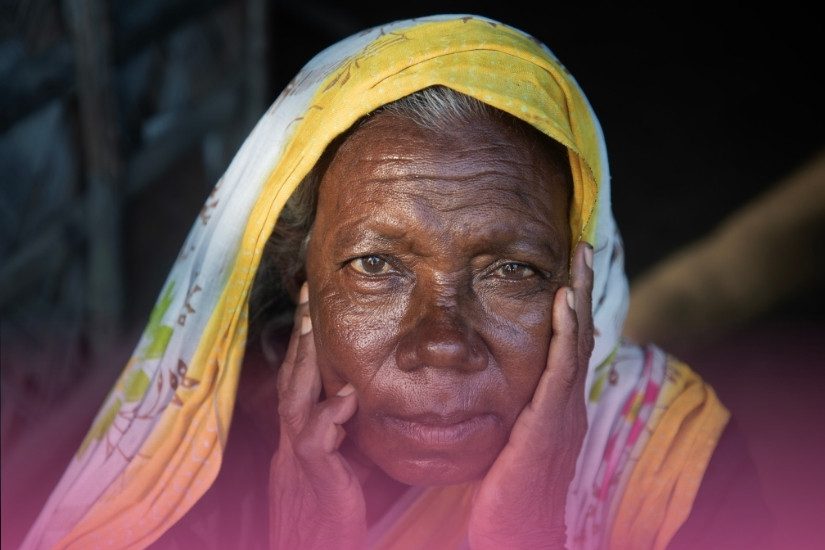
A close-up portrait of an elderly woman with her hands resting against her cheeks, looking directly at the camera. Overlaid on the image is a quote in white text: "There is a crack in everything, that's how the light gets in" attributed to Sivananthi Thanenthiran. A pink gradient fades up from the bottom.

– Sivananthi Thanenthiran, Executive Director, ARROW

There is a crack in everything, that’s how the light gets in

One month into 2026, and there are already signs that this will be an intense year for advocates of women’s rights, sexual and reproductive health and rights (SRHR), and gender equality.

The start of 2026 saw the capture of Venezuela – and signaled the breaking of the ‘rules-based’ system which has been coming into reckoning after the relentless wars on Ukraine and Palestine were left unchecked by multilateral system and the international community.

This followed close by the withdrawal of the United States (US) from 63 bodies of the United Nations, many of which they had co-founded, again signaled this cleavage. As they abdicated their global role – it cannot be denied we now have the US, Russia and China as the behemoths in the world.

We are not yet living in a global multi-polar world, but one with which we have to contend with the geo-politics of the ‘spheres of influence.’

The spheres of influence

The intended expansion of BRICS and the ASEAN blocs, the creation of the European Union (EU)-India ‘mother-of-all’ trade deals, and EU-Mercosur partnership agreement all signal new geo-political alliances. The West’s iciness towards China is melting, simply because the alternative is being trapped in the concentric circles of Dante’s Inferno.

On the other side, the potential unravelling of the multilateral system is happening in real time. Whilst the UN80 ‘reforms’ are touted as a ‘renewal’ of the United Nations (UN), but in essence are stripping away at the global frameworks, institutions and processes – many of which we as feminist, women’s rights and youth movements have been working with in order to advance our rights.

Carney’s line at Davos, called this “a time of rupture.” From the eyes of the West – indeed it is a time for rupture. But quietly, middle powers were already grouping in the last few decades – regionally and cross-regionally. Blocs such as Southern African Development Community (SADC), ASEAN, the Gulf Cooperation Council, and Mercosur all testify to the need and investment of governments building blocks for this.

But this is not the first time.
A portrait of a young woman with a neutral expression looking slightly off-camera.

The rupture in time

In 1955, the Bandung Principles, led to the formation of the Non-Aligned Movement with more than 120 countries joining the movement to help navigate the Cold War. This type of movement by nations across border has then resonated through the times. During the COVID-19 pandemic – under the leadership of South Africa and India – more than 100 countries supported the TRIPS (Trade-Related Aspects of Intellectual Property Rights) waiver of intellectual property rights over vaccines, diagnostics and treatments at the World Trade Organisation. Most recently – in South Africa vs Israel – member states and regional blocs, across Europe, Africa, Asia and Latin-America supported the case at the International Court of Justice.
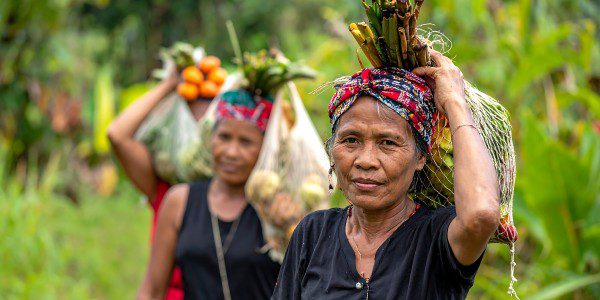
A medium shot of three women walking along a lush, green outdoor path. The woman in the foreground wears a dark top and a colorful patterned headwrap, carrying a large mesh bag of harvested goods over her shoulder. Two other women follow behind her, also carrying produce.

Rupture is brutal. It signals a break and breakdown of time and relationships. It is both forced and forceful. Anthropologists see rupture as essential to the continuity of existence, integral to both stasis and transformation. Rupture is the battle between the old and the new, the traditional and the modern. Rupture signifies radical change, and involves breaking down as well as building up, seeking new directions, sowing seeds for another future. Rupture in the threads of history allow for us to slip into the new world, the new time. Ruptures are both political and personal. Challenges the way individuals and societies remember the past and think of the future. The moment of rupture offers us an opportunity for reimagining the future. However, we can’t be Pollyannas about it. Because rupture also brings the possibility of erasure, loss, negation.

I take solace in the evident fact that the causes for this rupturing moment is not a breakaway for progress but rather a rupture to take us back into time.

An imperial power does not give us free treats

The ‘America First’ global health policy demonstrates this – where the health compacts being negotiated with governments are packed with clauses enabling access to data, critical minerals, and supply chains for the United States. An imperial power does not come to the table to give us free treats. Global indicators for health and development are not useful metrics for this purpose because what benefits come from eliminating poverty, ensuring literacy, and reducing mortality, including maternal mortality, for colonial powers?

But we are living in an age where all of us have tasted and enjoy some freedoms, some democratic rights, some benefits of development. For us there will be no going back. Women are not going to be entering marriages of the 1950s and young people are not going to be conscripted into a world war. Women and young people wanting to control their fertility, engaging in relationships of their choice, expressing their sexual and gender preferences – there’s no putting these genies back in the bottle so to speak. The reason is because these choices hit us most deeply, at the core of our being, because love, family, individual identity continue to be integral to human beings everywhere.

Transforming norms and narratives and power shifting with ARROW, partners and allies
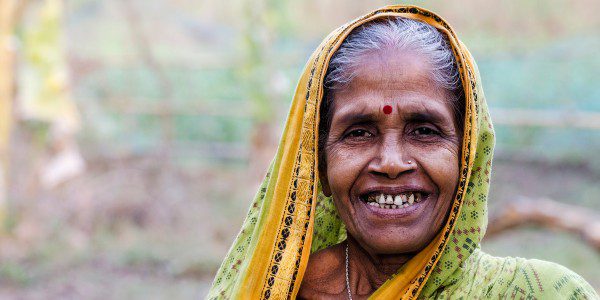
A close-up portrait of an elderly woman smiling warmly. She is wearing a green patterned sari with a yellow border draped over her head. The background is a soft, blurred natural setting.

How we work and continue to agitate for substantive freedoms, equality and inclusivity in the time of rupture should be our central concern. To this end, ARROW is trying to reorganise ourselves to work more purposefully, more strategically in this time of rupture and chaos. We are embarking on our new strategic plan, which we think will help us and our partners steer through these new waters. We are trying to work more intentionally on transforming norms and narratives and shifting power in the next five years and we are committed for the long run. It took more than a century to end the transatlantic slave trade. It took 88 years to end slavery in the United States. It took 46 years to end apartheid in South Africa. We all have the power to make it to the endgame.

Do not miss

Vietnam

  • Centre for Creative Initiatives in Health and Population (CCIHP)

Sri Lanka

  • Bakamoono;
  • Women and Media Collective (WMC),
  • Youth Advocacy Network – Sri Lanka (YANSL)

Singapore

  • End Female Genital Cutting Singapore
  • Reproductive Rights (WGNRR)

Philippines

  • Democratic Socalist Women of the Philippines (DSWP);
  • Galang;
  • Healthcare Without Harm;
  • Institute for Climate and Sustainable Cities;
  • Likhaan Centre for Women’s Health;
  • Nisa UI Haqq Fi Bangsamoro;
  • PATH Foundation Inc. (PFPI);
  • Women’s Global Network for
    Reproductive Rights (WGNRR)

Pakistan

  • Aahung, Centre for Social Policy Development (CSPD);
  • Forum for Dignity Initiative (FDI);
  • Gravity Development Organization; Green Circle Organization;
  • Indus Resources Center (IRC);
  • Idara-e-Taleem-O-Aaghai (ITA);
  • Rehnuma – Family Planning Association Pakistan;
  • Shelter
    Participatory Organisation;
  • Shirkat Gah;
  • The Enlight Lab

Nepal

  • Beyond Beijing Committee (BBC);
  • Blind Youth Association of Nepal;
  • Blue Diamond Society (BDS);
  • Nepalese Youth for Climate Action (NYCA);
  • Visible Impact;
  • Women’s Rehabilitation Centre (WOREC);
  • YPEER Nepal;
  • YUWA

Myanmar

  • Colourful Girls Organization;
  • Green Lotus Myanmar

Maldives

  • Hope for Women;
  • Society for Health Education (SHE)

Malaysia

  • Federation of Reproductive Health Associations of Malaysia (FRHAM);
  • Joint Action Group for Gender Equality (JAG);
  • Justice for Sisters (JFS);
  • Reproductive Health Association of
    Kelantan (ReHAK);
  • Reproductive Rights Advocacy Alliance Malaysia (RRAAM);
  • Sisters in Islam (SIS)

Lao PDR

  • Lao Women’s Union;
  • The Faculty of Postgraduate Studies at the University of Health
    Sciences (UHS)

Indonesia

  • Aliansi Satu Visi (ASV);
  • CEDAW Working Group;
  • Hollaback! Jakarta;
  • Institut Kapal Perempuan;
  • Kalyanamitra;
  • Komnas Perempuan;
  • Remaja Independen Papua/Independent Youth
    Forum Papua (FRIP/IYFP);
  • Perkumpulan Keluarga Berencana Indonesia (PKBI);
  • Perkumpulan Lintas Feminis Jakarta;
  • Perkumpulan Pamflet Generasi;
  • RUTGERS Indonesia;
  • Sanggar SWARA;
  • Women on Web;
  • Yayasan Kesehatan Perempuan (YKP); 
  • YIFOS Indonesia

India

  • CommonHealth;
  • Love Matters India;
  • Pravah;
  • Rural Women’s Social Education Centre (RUWSEC);
  • SAHAYOG;
  • Sahaj;
  • Sahiyo;
  • SAMA – Resource Group for Women and Health;
  • WeSpeakOut;
  • The YP Foundation (TYPF)

Morocco

  • Association Marocaine de Planification Familiale (AMPF),
  • Morocco Family Planning Association
There is a crack in everything, that’s how the light gets in 💡

– Sivananthi Thanenthiran, Executive Director, ARROW

There is a crack in everything, that’s how the light gets in

One month into 2026, and there are already signs that this will be an intense year for advocates of women’s rights, sexual and reproductive health and rights (SRHR), and gender equality.

The start of 2026 saw the capture of Venezuela – and signaled the breaking of the ‘rules-based’ system which has been coming into reckoning after the relentless wars on Ukraine and Palestine were left unchecked by multilateral system and the international community.

This followed close by the withdrawal of the United States (US) from 63 bodies of the United Nations, many of which they had co-founded, again signaled this cleavage. As they abdicated their global role – it cannot be denied we now have the US, Russia and China as the behemoths in the world.

We are not yet living in a global multi-polar world, but one with which we have to contend with the geo-politics of the ‘spheres of influence.’

The spheres of influence

The intended expansion of BRICS and the ASEAN blocs, the creation of the European Union (EU)-India ‘mother-of-all’ trade deals, and EU-Mercosur partnership agreement all signal new geo-political alliances. The West’s iciness towards China is melting, simply because the alternative is being trapped in the concentric circles of Dante’s Inferno.

On the other side, the potential unravelling of the multilateral system is happening in real time. Whilst the UN80 ‘reforms’ are touted as a ‘renewal’ of the United Nations (UN), but in essence are stripping away at the global frameworks, institutions and processes – many of which we as feminist, women’s rights and youth movements have been working with in order to advance our rights.

Carney’s line at Davos, called this “a time of rupture.” From the eyes of the West – indeed it is a time for rupture. But quietly, middle powers were already grouping in the last few decades – regionally and cross-regionally. Blocs such as Southern African Development Community (SADC), ASEAN, the Gulf Cooperation Council, and Mercosur all testify to the need and investment of governments building blocks for this.

But this is not the first time.

A portrait of a young woman with a neutral expression looking slightly off-camera.

The rupture in time

In 1955, the Bandung Principles, led to the formation of the Non-Aligned Movement with more than 120 countries joining the movement to help navigate the Cold War. This type of movement by nations across border has then resonated through the times. During the COVID-19 pandemic – under the leadership of South Africa and India – more than 100 countries supported the TRIPS (Trade-Related Aspects of Intellectual Property Rights) waiver of intellectual property rights over vaccines, diagnostics and treatments at the World Trade Organisation. Most recently – in South Africa vs Israel – member states and regional blocs, across Europe, Africa, Asia and Latin-America supported the case at the International Court of Justice.

A medium shot of three women walking along a lush, green outdoor path. The woman in the foreground wears a dark top and a colorful patterned headwrap, carrying a large mesh bag of harvested goods over her shoulder. Two other women follow behind her, also carrying produce.

Rupture is brutal. It signals a break and breakdown of time and relationships. It is both forced and forceful. Anthropologists see rupture as essential to the continuity of existence, integral to both stasis and transformation. Rupture is the battle between the old and the new, the traditional and the modern. Rupture signifies radical change, and involves breaking down as well as building up, seeking new directions, sowing seeds for another future. Rupture in the threads of history allow for us to slip into the new world, the new time. Ruptures are both political and personal. Challenges the way individuals and societies remember the past and think of the future. The moment of rupture offers us an opportunity for reimagining the future. However, we can’t be Pollyannas about it. Because rupture also brings the possibility of erasure, loss, negation.

I take solace in the evident fact that the causes for this rupturing moment is not a breakaway for progress but rather a rupture to take us back into time.

An imperial power does not give us free treats

The ‘America First’ global health policy demonstrates this – where the health compacts being negotiated with governments are packed with clauses enabling access to data, critical minerals, and supply chains for the United States. An imperial power does not come to the table to give us free treats. Global indicators for health and development are not useful metrics for this purpose because what benefits come from eliminating poverty, ensuring literacy, and reducing mortality, including maternal mortality, for colonial powers?

But we are living in an age where all of us have tasted and enjoy some freedoms, some democratic rights, some benefits of development. For us there will be no going back. Women are not going to be entering marriages of the 1950s and young people are not going to be conscripted into a world war. Women and young people wanting to control their fertility, engaging in relationships of their choice, expressing their sexual and gender preferences – there’s no putting these genies back in the bottle so to speak. The reason is because these choices hit us most deeply, at the core of our being, because love, family, individual identity continue to be integral to human beings everywhere.

Transforming norms and narratives and power shifting with ARROW, partners and allies

A close-up portrait of an elderly woman smiling warmly. She is wearing a green patterned sari with a yellow border draped over her head. The background is a soft, blurred natural setting.

How we work and continue to agitate for substantive freedoms, equality and inclusivity in the time of rupture should be our central concern. To this end, ARROW is trying to reorganise ourselves to work more purposefully, more strategically in this time of rupture and chaos. We are embarking on our new strategic plan, which we think will help us and our partners steer through these new waters. We are trying to work more intentionally on transforming norms and narratives and shifting power in the next five years and we are committed for the long run. It took more than a century to end the transatlantic slave trade. It took 88 years to end slavery in the United States. It took 46 years to end apartheid in South Africa. We all have the power to make it to the endgame.

Do not miss

Maldives

  • Hope for Women
  • Society for Health Education (SHE)

Mongolia

  • MONFEMNET National Network