Harnessing Demographic Dividend in India Through Reproductive Justice

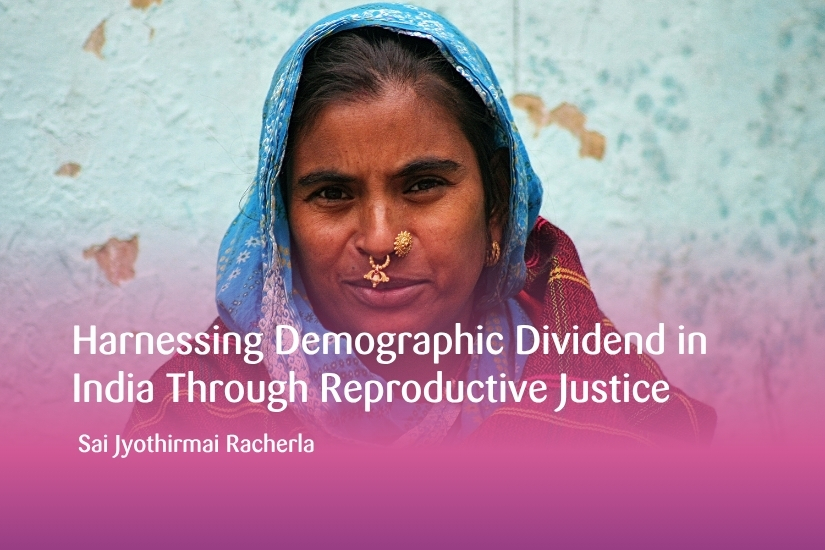
Banner image featuring a portrait of an Indian woman, with overlaid text reading "Harnessing Demographic Dividend in India Through Reproductive Justice" - written by ARROW's Deputy Executive Director, Sai Jyothirmai Racherla.

When philanthropy, academicians, and civil society organisations, including women and youth organisations gathered on 26 August 2026 on the sidelines of the AVPN Conference 2026 for a multistakeholder roundtable, the event delivered an urgent call for investments in reproductive health rights and justice of women and young people in all their diversity, especially those who are vulnerable, excluded and marginalised to realise the demographic dividend in India in its entirety. That sense of urgency was set by ARROW’s Deputy Executive Director, Sai Jyothirmai Racherla, who in her opening statement, spoke of rethinking the approach to the demographic dividend In India through the lens of reproductive Justice.

We present to you Sai’s statement from the “Harnessing the Demographic Dividend: Transformative Solutions Anchored in Reproductive Justice” roundtable, co-organised by the Asian-Pacific Resource and Research Centre for Women (ARROW), the IPAS Development Foundation (IDF), and the Kaleidoscope Collective – Championing Reproductive Justice Centered Health Systems.

————————

Good evening, everyone, and thank you for being here. We welcome you all on behalf of ARROW, IDF, New Delhi, and the Kaleidoscope Collective. The Collective is operational in India and Nepal in Asia and Benin and Kenya in Africa. It focuses on health systems strengthening for access to comprehensive sexual and reproductive health services for all, especially young people and women in all their diversity.

We have gathered here today at a critical point in time. With less than five years left for us to achieve the Agenda 2030 for Sustainable Development, countries in Asia and the Pacific region look to meet none of the 17 Sustainable Development Goals (SDG). While the case of India presents a slightly optimistic picture compared to that of the region, much needs to be done.

Where India Stands on the Sustainable Development Goals
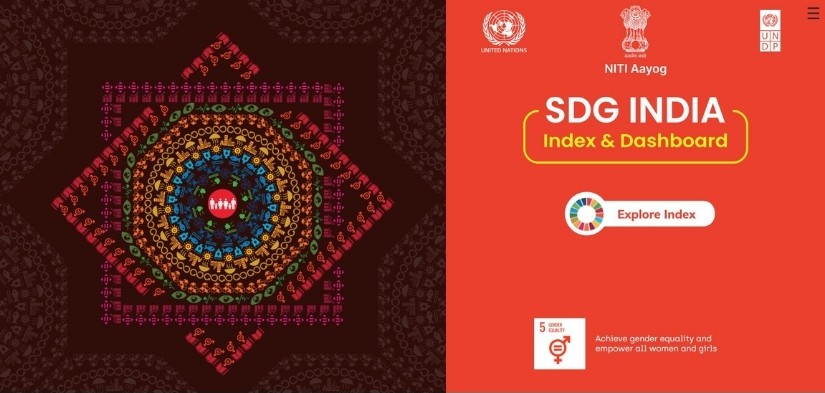
The NITI Aayog's SDG India Index flags SDG 5 (Gender Equality) as an area needing significant effort, with key gaps in adolescent pregnancy, child marriage, and female labour force participation rates. All three are crucial to harnessing the demographic dividend India currently enjoys.

The NITI Aayog’s SDG India Index flags SDG 5 (Gender Equality) as an area needing significant effort, with key gaps in adolescent pregnancy, child marriage, and female labour force participation rates. All three are crucial to harnessing the demographic dividend India currently enjoys.

We understand demographic dividend as the economic growth potential from shifts in a population’s age structure — specifically when the working-age share (aged 15–64) outweigh the non-working-age share. While this dynamic can be debated, today we focus on harnessing the demographic dividend anchored in enabling conditions, such as reproductive rights and justice for India.

Read more: ARROW for Change – Reproductive Justice: Recalibrating the SRHR Agenda

The Numbers Behind the Demographic Dividend in India

We definitely have the opportunity of demographic dividend in numbers:

  • India’s young people in the age group of 15 to 29 make up about 27% to 29% of India’s total population, totalling roughly 371 to 420 million.
  • Women in all their diversity in the age group of 15-49 years make up about 25% of India’s total population, totalling roughly 389 million individuals.

Yet in the context of adolescent pregnancies, child marriages, poor access to reproductive health services, especially amongst those left far behind as a result of intersectional marginalisation, and exclusion a question lingers. Are our women and young people able to realise their full sustainable development potential?

The solutions to harness the demographic dividend in India call for fundamental shifts in gender equality, sexual and reproductive health policies and their effective implementation at the systems level at scale, anchored in reproductive justice.

The ICPD Programme of Action and the SDGs

This is not a new argument. In Cairo in 1994, 179 governments signed the Programme of Action that continues to anchor global consensus. That historic document made a very specific claim: “right to development is itself a human right”, that the human person — not GDP — is its central subject, and that ensuring women’s including young people’s ability to control their own fertility is the cornerstone of population and sustainable development policies.

More than thirty years since the ICPD rights-based framing in 1994, we are seeing a narrowing of reproductive rights and justice implementation. As we move towards the 2030 timeline of realising the SDGs in India, we must bring back the principles of the ICPD Programme of Action, into the national policies and frameworks and ensure its implementation at scale, especially within public health systems levels.
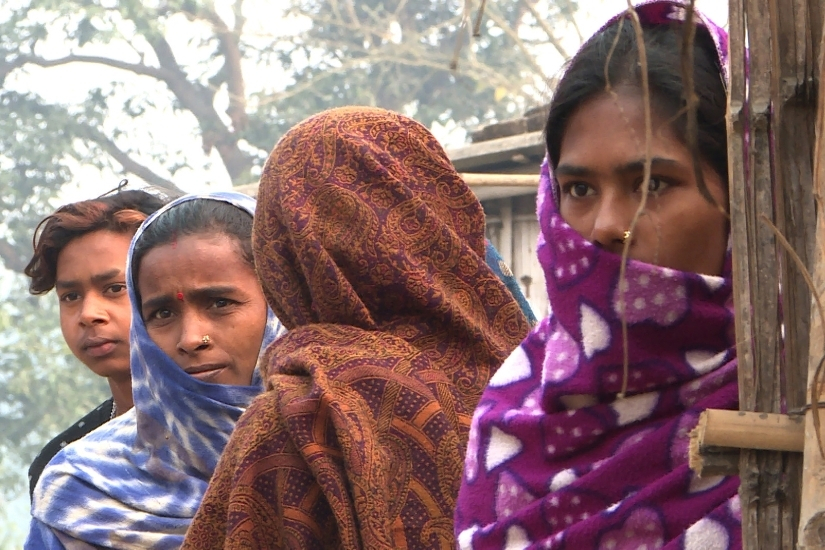
A line of Indian women and youth outdoors, standing together.

The ICPD Programme of Action doesn’t ask us to choose between reproductive rights, gender equality, and development. It says the opposite: that development is a human right, that the human person is its central subject, and that women’s and young people control over their own fertility is a cornerstone of achieving it.

Reimagining Investments and Strengthening Existing Systems

Business as usual is no longer an option; it is a guarantee of failure. Tonight, we will assess and reimagine the pathways of harnessing the demographic dividend in India for sustainable development anchored in reproductive health, rights and justice.

We will urgently reimagine:

  1. Where we invest resources to ensure women and young people in all their diversity can exercise their agency, their reproductive autonomy and realise their full sustainable development potential.
  2. How we strengthen existing systems to deliver on reproductive health, rights and justice for sustainable development.

Vietnam

  • Centre for Creative Initiatives in Health and Population (CCIHP)

Sri Lanka

  • Bakamoono;
  • Women and Media Collective (WMC),
  • Youth Advocacy Network – Sri Lanka (YANSL)

Singapore

  • End Female Genital Cutting Singapore
  • Reproductive Rights (WGNRR)

Philippines

  • Democratic Socalist Women of the Philippines (DSWP);
  • Galang;
  • Healthcare Without Harm;
  • Institute for Climate and Sustainable Cities;
  • Likhaan Centre for Women’s Health;
  • Nisa UI Haqq Fi Bangsamoro;
  • PATH Foundation Inc. (PFPI);
  • Women’s Global Network for
    Reproductive Rights (WGNRR)

Pakistan

  • Aahung, Centre for Social Policy Development (CSPD);
  • Forum for Dignity Initiative (FDI);
  • Gravity Development Organization; Green Circle Organization;
  • Indus Resources Center (IRC);
  • Idara-e-Taleem-O-Aaghai (ITA);
  • Rehnuma – Family Planning Association Pakistan;
  • Shelter
    Participatory Organisation;
  • Shirkat Gah;
  • The Enlight Lab

Nepal

  • Beyond Beijing Committee (BBC);
  • Blind Youth Association of Nepal;
  • Blue Diamond Society (BDS);
  • Nepalese Youth for Climate Action (NYCA);
  • Visible Impact;
  • Women’s Rehabilitation Centre (WOREC);
  • YPEER Nepal;
  • YUWA

Myanmar

  • Colourful Girls Organization;
  • Green Lotus Myanmar

Maldives

  • Hope for Women;
  • Society for Health Education (SHE)

Malaysia

  • Federation of Reproductive Health Associations of Malaysia (FRHAM);
  • Joint Action Group for Gender Equality (JAG);
  • Justice for Sisters (JFS);
  • Reproductive Health Association of
    Kelantan (ReHAK);
  • Reproductive Rights Advocacy Alliance Malaysia (RRAAM);
  • Sisters in Islam (SIS)

Lao PDR

  • Lao Women’s Union;
  • The Faculty of Postgraduate Studies at the University of Health
    Sciences (UHS)

Indonesia

  • Aliansi Satu Visi (ASV);
  • CEDAW Working Group;
  • Hollaback! Jakarta;
  • Institut Kapal Perempuan;
  • Kalyanamitra;
  • Komnas Perempuan;
  • Remaja Independen Papua/Independent Youth
    Forum Papua (FRIP/IYFP);
  • Perkumpulan Keluarga Berencana Indonesia (PKBI);
  • Perkumpulan Lintas Feminis Jakarta;
  • Perkumpulan Pamflet Generasi;
  • RUTGERS Indonesia;
  • Sanggar SWARA;
  • Women on Web;
  • Yayasan Kesehatan Perempuan (YKP); 
  • YIFOS Indonesia

India

  • CommonHealth;
  • Love Matters India;
  • Pravah;
  • Rural Women’s Social Education Centre (RUWSEC);
  • SAHAYOG;
  • Sahaj;
  • Sahiyo;
  • SAMA – Resource Group for Women and Health;
  • WeSpeakOut;
  • The YP Foundation (TYPF)

Morocco

  • Association Marocaine de Planification Familiale (AMPF),
  • Morocco Family Planning Association
Harnessing Demographic Dividend in India Through Reproductive Justice

When philanthropy, academicians, and civil society organisations, including women and youth organisations gathered on 26 August 2026 on the sidelines of the AVPN Conference 2026 for a multistakeholder roundtable, the event delivered an urgent call for investments in reproductive health rights and justice of women and young people in all their diversity, especially those who are vulnerable, excluded and marginalised to realise the demographic dividend in India in its entirety. That sense of urgency was set by ARROW’s Deputy Executive Director, Sai Jyothirmai Racherla, who in her opening statement, spoke of rethinking the approach to the demographic dividend In India through the lens of reproductive Justice.

We present to you Sai’s statement from the “Harnessing the Demographic Dividend: Transformative Solutions Anchored in Reproductive Justice” roundtable, co-organised by the Asian-Pacific Resource and Research Centre for Women (ARROW), the IPAS Development Foundation (IDF), and the Kaleidoscope Collective – Championing Reproductive Justice Centered Health Systems.

————————

Good evening, everyone, and thank you for being here. We welcome you all on behalf of ARROW, IDF, New Delhi, and the Kaleidoscope Collective. The Collective is operational in India and Nepal in Asia and Benin and Kenya in Africa. It focuses on health systems strengthening for access to comprehensive sexual and reproductive health services for all, especially young people and women in all their diversity.

We have gathered here today at a critical point in time. With less than five years left for us to achieve the Agenda 2030 for Sustainable Development, countries in Asia and the Pacific region look to meet none of the 17 Sustainable Development Goals (SDG). While the case of India presents a slightly optimistic picture compared to that of the region, much needs to be done.

Where India Stands on the Sustainable Development Goals

The NITI Aayog's SDG India Index flags SDG 5 (Gender Equality) as an area needing significant effort, with key gaps in adolescent pregnancy, child marriage, and female labour force participation rates. All three are crucial to harnessing the demographic dividend India currently enjoys.

The NITI Aayog’s SDG India Index flags SDG 5 (Gender Equality) as an area needing significant effort, with key gaps in adolescent pregnancy, child marriage, and female labour force participation rates. All three are crucial to harnessing the demographic dividend India currently enjoys.

We understand demographic dividend as the economic growth potential from shifts in a population’s age structure — specifically when the working-age share (aged 15–64) outweigh the non-working-age share. While this dynamic can be debated, today we focus on harnessing the demographic dividend anchored in enabling conditions, such as reproductive rights and justice for India.

Read more: ARROW for Change – Reproductive Justice: Recalibrating the SRHR Agenda

The Numbers Behind the Demographic Dividend in India

We definitely have the opportunity of demographic dividend in numbers:

  • India’s young people in the age group of 15 to 29 make up about 27% to 29% of India’s total population, totalling roughly 371 to 420 million.
  • Women in all their diversity in the age group of 15-49 years make up about 25% of India’s total population, totalling roughly 389 million individuals.

Yet in the context of adolescent pregnancies, child marriages, poor access to reproductive health services, especially amongst those left far behind as a result of intersectional marginalisation, and exclusion a question lingers. Are our women and young people able to realise their full sustainable development potential?

The solutions to harness the demographic dividend in India call for fundamental shifts in gender equality, sexual and reproductive health policies and their effective implementation at the systems level at scale, anchored in reproductive justice.

The ICPD Programme of Action and the SDGs

This is not a new argument. In Cairo in 1994, 179 governments signed the Programme of Action that continues to anchor global consensus. That historic document made a very specific claim: “right to development is itself a human right”, that the human person — not GDP — is its central subject, and that ensuring women’s including young people’s ability to control their own fertility is the cornerstone of population and sustainable development policies.

More than thirty years since the ICPD rights-based framing in 1994, we are seeing a narrowing of reproductive rights and justice implementation. As we move towards the 2030 timeline of realising the SDGs in India, we must bring back the principles of the ICPD Programme of Action, into the national policies and frameworks and ensure its implementation at scale, especially within public health systems levels.

A line of Indian women and youth outdoors, standing together.

The ICPD Programme of Action doesn’t ask us to choose between reproductive rights, gender equality, and development. It says the opposite: that development is a human right, that the human person is its central subject, and that women’s and young people control over their own fertility is a cornerstone of achieving it.

Reimagining Investments and Strengthening Existing Systems

Business as usual is no longer an option; it is a guarantee of failure. Tonight, we will assess and reimagine the pathways of harnessing the demographic dividend in India for sustainable development anchored in reproductive health, rights and justice.

We will urgently reimagine:

  1. Where we invest resources to ensure women and young people in all their diversity can exercise their agency, their reproductive autonomy and realise their full sustainable development potential.
  2. How we strengthen existing systems to deliver on reproductive health, rights and justice for sustainable development.

Maldives

  • Hope for Women
  • Society for Health Education (SHE)

Mongolia

  • MONFEMNET National Network