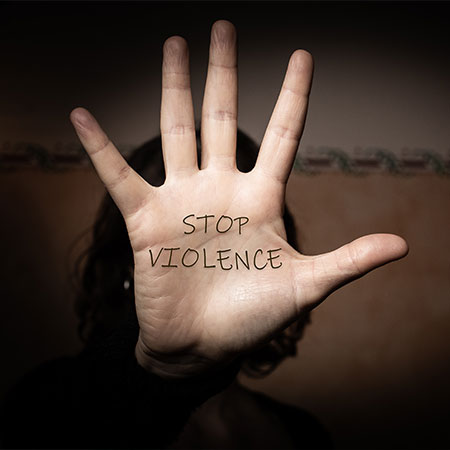
Gender-based violence (GBV) refers to harmful acts directed at an individual based on their gender. It is rooted in gender inequality, the abuse of power and harmful norms and is a serious violation of human rights and a life-threatening health and protection issue.
Malaysia's Fight Against Sexual Harassment
It must be noted that there have been strides towards the positive in terms of gender equality in Malaysia. In August 2022, the Anti-Sexual Harassment Act 2022 was passed by the Dewan Negara (the upper house of the Parliament of Malaysia) and was the first of many steps to increase the prevention and awareness of sexual harassment (in addition to the sexual harassment provisions in the Employment Act). In March 2023, several provisions of the Act came into effect, with the rest of the Act coming into effect in stages in the future.
Malaysia passed amendments to the Penal Code making stalking (physically and online) a crime. The new Section 507A was included under the Penal Code to make stalking an offence and the passing of the amendments to the Penal Code and Criminal Procedure Code is a positive step towards improving Malaysia’s response to gender-based violence and for survivors to find relief and seek protection.
Protecting women and gender minorities
Acknowledging the progress Malaysia has made over the years in protecting women and gender minorities, we are still left behind when it comes to effective crisis intervention and management.
In 2017, Malaysia enacted the Sexual Offences Against Children Act 2017. Malaysia has a special hotline designated for women and children cases but Malaysian NGOs are receiving an increase of crisis calls since the pandemic started.
Since 1997, Malaysia has had the Domestic Violence Act (DVA) implemented from 1996 onwards in response to the National Women Policy and its Plan of Action. The government has responded to women’s groups calling for further improvements to this law with amendments in 2011 and 2017. Among others, these widened the definition of domestic violence to cover “emotional, mental and psychological forms of violence”15 and created the Emergency Protection Order to offer survivors quicker protection while at the same time introducing fines for those who contravened this ruling.” (FRHAM, 2021).
On moving forward to uphold women’s rights and dignity and warrioring against violence on women and girls we must carry out the following:
Review existing law and policies with the support of women NGOs, and assess its implementation. This includes assessing the data gathering process and its validity.
Continue supporting reform of the Domestic Violence Act, in particular, to broaden its definition to include intimate partner violence so that ‘in-union’ couples can benefit too from the law’s coverage; improve rehabilitation provisions; and extend the maximum duration of Protection Orders.
Ensure that survivors of gender-based violence have better support services regardless of their social status and location. Improvements can be made in relation to, for example, lodging police reports, obtaining protection, getting services via the One Stop Crisis Centre, and support during court proceedings.